
The 1031 Exchange Process
Two deadlines, one rule: structure your sale as an exchange before you close — not after.
The Timeline
The 1031 Exchange timeline, from closing to closing

The Steps
1
Contract to Sell Relinquished Property
You enter into a contract to sell the property you currently own (the "Relinquished Property").
2
Assign your Contract rights
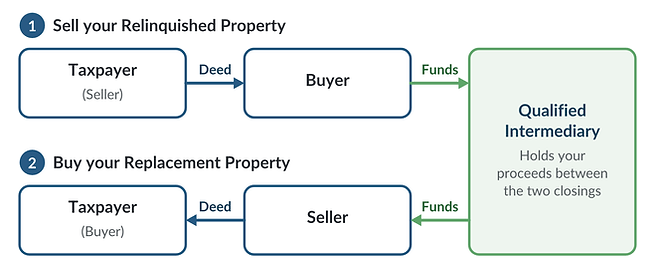
Before closing, assign your rights in the sales contract to Tidemark 1031 as your Qualified Intermediary.
3
Close on your sale as a 1031
The settlement statement reflects the transaction as a 1031 Exchange, with Tidemark 1031 named as your QI. You sign the closing documents just as you would in any standard sale.
4
Proceeds held by your Qualified Intermediary
Your net sale proceeds ("Exchange Proceeds") go directly to Tidemark 1031, held on your behalf. To preserve the deferral of your capital gains tax, you cannot access or benefit from these funds except to acquire your Replacement Property.
5
Identify Replacement Property
Within 45 calendar days, you provide written identification of your potential Replacement Properties to Tidemark 1031.
6
Contract to purchase
You enter into a contract to purchase at least one of the identified properties, and that contract is assigned to Tidemark 1031 as your Qualified Intermediary.
7
Close within 180 days
Within 180 calendar days of the closing of the sale of your Relinquished Property, the Replacement Property purchase closes. The 180-day deadline can end sooner. Your exchange must close by Day 180 or by the due date of your tax return for the year you sold (including extensions), whichever comes first.
8
1031 Funds are released
Tidemark 1031 provides your exchange funds toward the purchase price. You sign the closing documents as the buyer, and the property is deeded directly to you.
**
Reverse Exchange
A Reverse Exchange runs in the opposite order — you acquire the Replacement Property first, then sell your Relinquished Property. Timeframes remain the same. 45 calendar days to identify. 180 calendar days to close.