
Types of 1031 Exchanges
Delayed Exchange
The most common structure. You sell your property first, then have 45 days to identify a Replacement Property, and 180 days total to close on it. A Qualified Intermediary holds your proceeds throughout.
Best for: Investors who need time to find and secure the right Replacement Property.
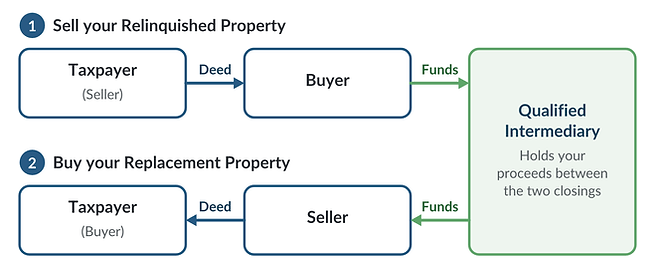
Simultaneous Exchange
The sale of your Relinquished Property and the purchase of your Replacement Property close on the same day.
Best for: Investors who already have a Replacement Property lined up and want to avoid the delayed-exchange timeline altogether.
Reverse Exchange
You acquire the Replacement Property before selling your current property (Relinquished Property). This is the reverse of the typical order. The Replacement Property is held by an Exchange Accommodation Titleholder (EAT) until the sale of the Relinquished Property closes, within the 180 day deadline.
Best for: Investors who need to lock down a desirable property before their current property sells.

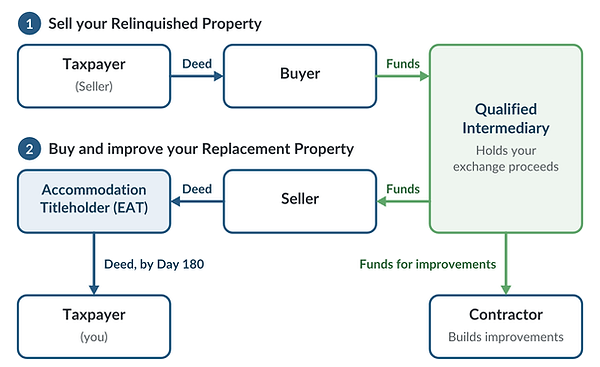
Improvement Exchange
Also called a construction exchange. You use Exchange Proceeds to build or improve the Replacement Property. The EAT must hold title to the Replacement Property during construction. All 1031 Exchange Proceeds must be expended within the 180-day window, and the finished property's value must meet or exceed the sales price of the Relinquished Property.
Best for: Investors who want to customize or develop their Replacement Property rather than buy it as-is.
Not sure which structure fits your situation? That's exactly what we're here for.